
Export and International Market Strategy Consulting
[OVERVIEW]
Exporting means "earning foreign currency"—a valid goal, but an incomplete one. Sustainable exporting demands a full strategic architecture. Drawing from deep knowledge of Turkey's production dynamics and UK/European buyer psychology, here's the truth: Product quality gets you in the door, but a robust strategy keeps you there long-term .
Avoid the Commodity Trap: Relying solely on cost leadership fails—cheaper competitors will always emerge.
Build Global Presence: Shift from price wars to branding that resonates with international buyers.
Proven Consulting Path: Escape commoditization and elevate your Turkish brand to a global player.
This approach transforms exports from short-term gains into enduring revenue streams.
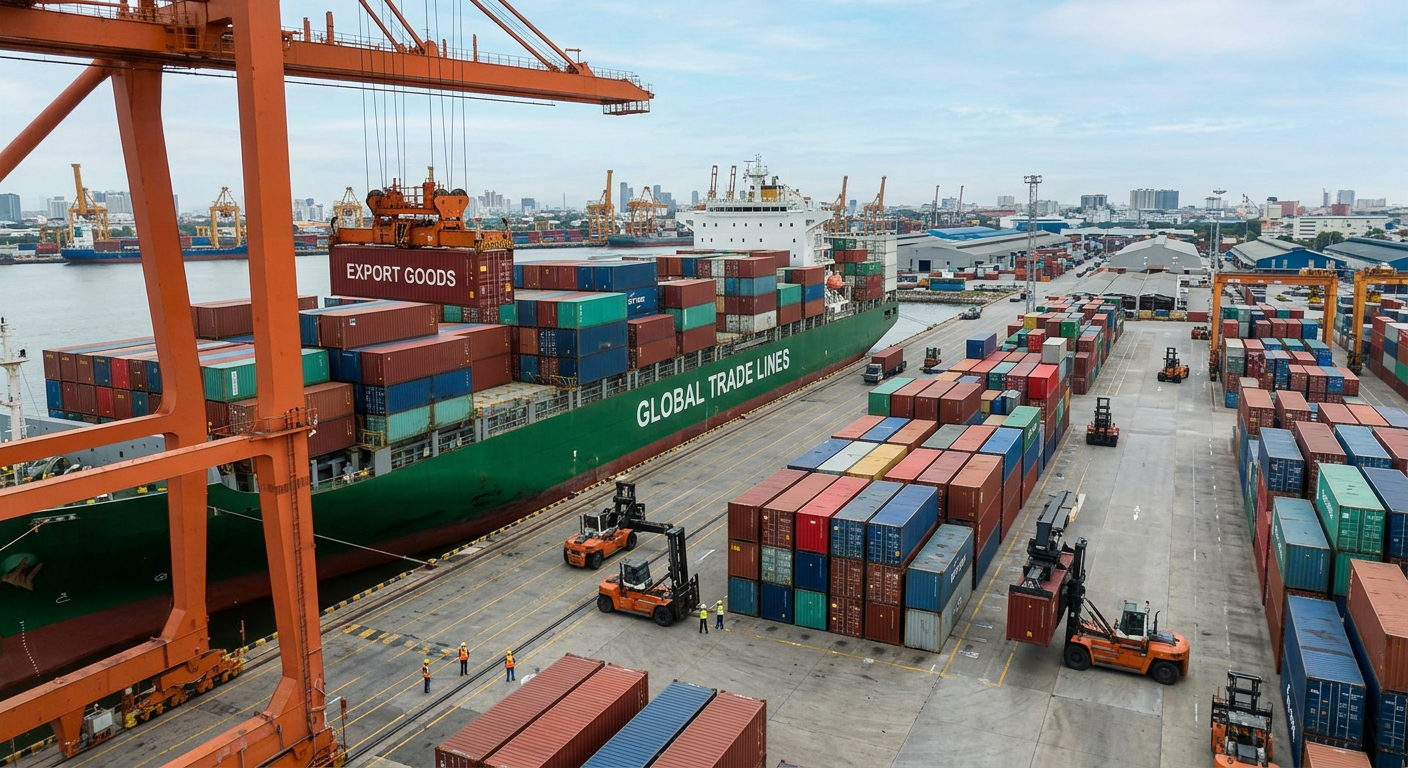
Crossing Borders: Exporting "Value," Not Containers
[HOW IT WORKS]
Why Do You Need a Strategic Partner ?
Entering international markets is not a matter of simply translating your brochure into English; it demands a deep understanding of regulations, cultural codes, and the competitive landscape in your target country.
Market Blindness: The belief that "if my product sells well in Turkey, it will also sell well in the UK" leads to what can be called market blindness, and it is a key reason many export initiatives underperform or fail.
Loss of Focus: Instead of trying to be everywhere, focusing on the right market selected through solid data helps prevent wasted budgets, time, and energy.
Especially after Brexit, the UK has moved into a new era in terms of customs procedures, documentation, and product standards, and these changes have reshaped how foreign suppliers must operate. Treating these technical details not as obstacles but as strategic levers allows you to differentiate from competitors—but doing so effectively requires specialized expertise.
If you think about your own sector, what is one specific regulatory or cultural factor in the UK that you suspect most Turkish competitors are overlooking right now?

Odinin Consulting Methodology:
A 4-Stage Globalization Pathway
-
Export Readiness Audit
First, we look in the mirror. Are your operational capacity, financial structure, and human resources ready for global competition? We clarify your competitive advantage not with a SWOT analysis, but with a VRIO (Value, Rarity, Imitability, Organization) analysis.
-
Target Market Intelligence and Selection
The world is vast, and your resources are limited. Which market offers you the highest ROI (Return on Investment) potential?
Macroeconomic data.
Competitor analysis.
Consumer behavior and cultural adaptation.
Analysis of opportunities, particularly along the UK-Turkey trade corridor
-
Go-to-Market Strategy
How will we enter the market?
Direct Export: Will we establish our own sales network?
Distributor Management: How to find and manage the right partner?
Digital Export (E-Export): How can we utilize B2C/B2B channels with Amazon, Etsy, or our own e-commerce infrastructure?
Pricing Strategy: Pricing based on "Perceived Value," not cost plus profit.
-
Application and Performance Management
Strategy shouldn't remain just on paper. I'll be by your side in managing the entire process, from logistics and customs to brand communication and customer relations. I'll ensure that Turquality and government incentives are integrated into the strategy.
Who is it suitable for?
B2B Manufacturers: Industrial companies with high production capacity but struggling with brand value abroad.
Family Businesses: Organizations that want to institutionalize their export department and bring the vision of second-generation managers to the field.
Scale-up Companies: Technology and service companies that have reached saturation point in their domestic market and want to enter the UK and European markets aggressively but strategically.
A Touch That Makes a Difference
Odinin doesn't just tell you "how to export"; Odinin designs how to implant the answer to the question "why should they choose you?" in the minds of global customers. We combine Istanbul's manufacturing power with London's strategic vision.
Are you ready to work together?
Let's schedule a discovery meeting to realistically assess your brand's global potential and transform your export goals from mere "wishes" into a "business plan."

Your Questions, Answered
-
The first and most critical step in developing an export strategy is for the company to objectively conduct an "Export Readiness Assessment." Many companies should measure their own production capacity, financial resilience, and human resource competence before focusing on market research; because a company whose internal operational processes are not compliant with global standards cannot establish itself in foreign markets through marketing alone, and journeys undertaken without this analysis usually result in wasted resources.
-
For Turkish brands wishing to enter the UK market, the most critical post-Brexit change is the technical barriers posed by the mandatory replacement of the CE mark with UKCA (UK Conformity Assessed) marking and the new customs procedures. Since the UK is no longer part of the EU Customs Union, Turkish companies must revise their product standards and certification processes according to British regulations and factor in the added customs waiting times in their inventory management.
-
In international market entry strategies, localization is the most fundamental element of trust, ensuring your brand is perceived by consumers in the target country as an "adopted" rather than a "foreign" brand. Simply translating the language is not enough; adapting every detail, from product packaging and color choices to payment methods and customer service tone, to the norms, values, and habits of that culture directly increases market retention and customer loyalty.
-
The most common strategic mistake made by Turkish SMEs in exports is trying to "sell everywhere" without conducting target market analysis and basing their competitive advantage solely on "low price." An unfocused market strategy makes the marketing budget inefficient, while a purely price-focused approach reduces the brand to the level of a "commodity"; this erodes profitability in the long run and prevents the formation of a loyal customer base.
-
Turquality and government incentives should be included in the process as a "lever" to finance and accelerate the export strategy after it has been determined; they should never be the strategy itself. Companies should first decide which market they will enter, with which product, and how. Then, in line with this plan, they should analyze which of the trade fair, rental, promotion, or brand registration supports offered by the Ministry of Trade are most suitable for their business plan and initiate the application processes.